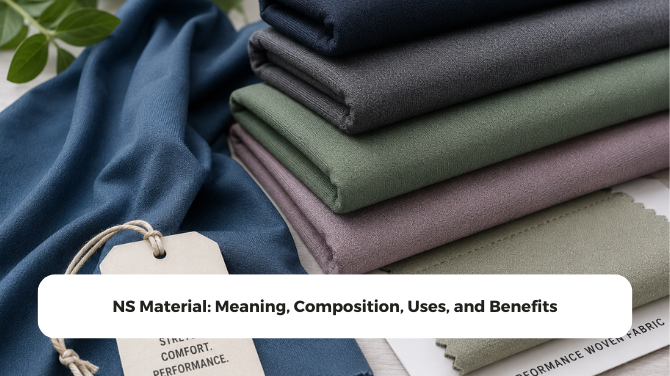
At Dinesh Exports, we get enquiries from brands and other fashion buyers looking for the right fabric for the collection. A few of these enquiries are sometimes really clear, and sometimes it is not that clear. Believe me, all of the buyers want to know what NS fabric is most of the time.
Buyers are always confused about these terms likeNS, TC, PC, or CVC. There are always confusing. Even experienced buyers ask us to explain what these fabric codes mean before placing an order. NS means Nylon Spandex. It combines the strength of nylon with the stretch and flexibility of spandex fabric. If you mix these two fibers together, you can create a fabric that is comfortable, durable, lightweight, and capable of maintaining its shape even after repeated use.
NS Material is used widely nowadays, especially blended with various natural fibers. Let’s learn about it in more detail.
Check out our Digital fabric swatch
What Does NS Material Mean?
NS Material is a combination of both nylon and spandex. This material will have the qualities of both fibers.
From Nylon you get its strength, durability, abrasion resistance, and a smooth appearance. From Spandex you get its exceptional stretch and recovery qualities that people love. If you have worn a spandex material, you know that it allows you to move comfortably while returning to its original shape.
This is the reason why the NS fabric is one of the most versatile materials available today.
The ratio in which both spandex and nylon are blended is based on the type of garment you are planning to produce. Once you have that in mind, the manufacturers can adjust the blend ratio for the right results.
What Is NS Material Made Of?
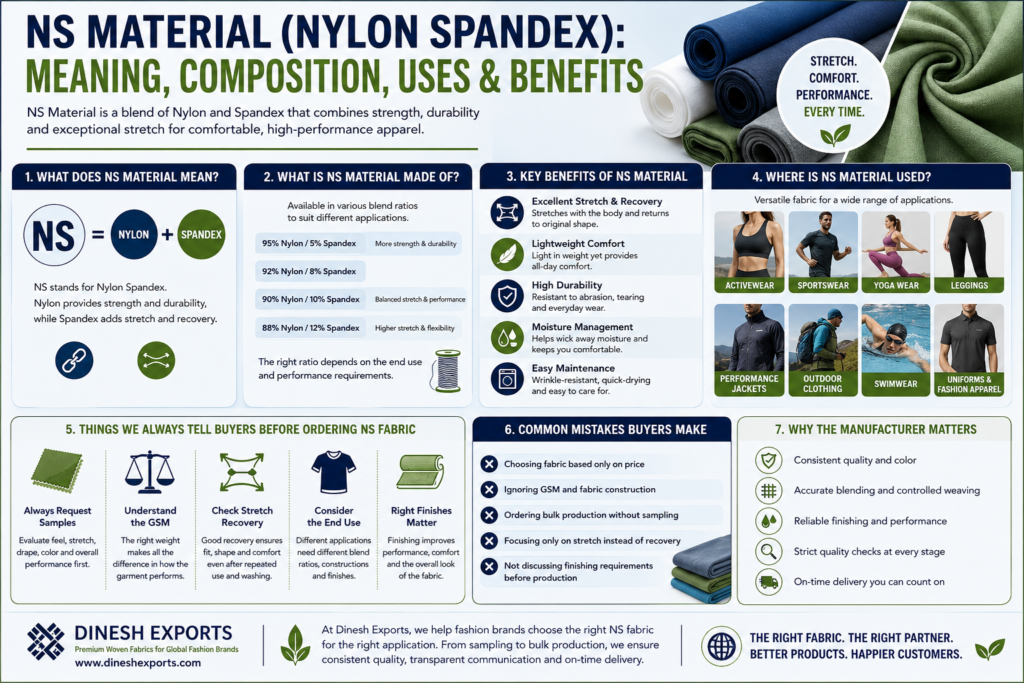
There are several blend ratios depending on the customer’s requirements.
Some of the most common include:
- 95% Nylon / 5% Spandex
- 92% Nylon / 8% Spandex
- 90% Nylon / 10% Spandex
- 88% Nylon / 12% Spandex
The reason why you see various spandex compositions is that the more spandex you add, the more flexibility the fabric gets. If you add more nylon, then it will increase the fabric durability and structural stability. But ultimately, the end use determines the ratio.
Why We’ve Seen So Many Fashion Brands Choose NS Material
Over the last three decades of us being in this industry, we have seen the popularity rise for the NS material.
Some of the biggest reasons why brands continue choosing NS material are:
- Excellent Stretch and Recovery
You can easily stretch the fabrics and have them go back to their original shape without losing its real shape. It will also fit better than other fabric materials.
- Lightweight Comfort
Nylon is also super lightweight, so the end consumers not only get a durable material, but also a lightweight one.
- Better Durability
Nylon is naturally resistant to abrasion and tearing, making it a highly durable material.
- Moisture Management
People that workout a lot prefer NS material because it can absorb moisture a lot. So its ideal for things like gym, cycling, and other type of performance related activities.
- Easy Maintenance
Nylon spandex won’t wrinkle easily, making it easy to maintain.
Where Is NS Material Commonly Used?
Because of its versatility, NS material is now commonly used, such as:
- Activewear
- Sportswear
- Yoga apparel
- Leggings
- Performance jackets
- Outdoor clothing
- Compression garments
- Swimwear
- Workwear requiring flexibility
- Fashion apparel with stretch comfort
If you want the final product to act the way you want, then you need to focus on selecting the right GSM, weave construction, finish, and blend ratio.
4 Things We Always Tell Buyers Before Ordering NS Material
Asking the right questions before you place the order with a new manufacturer can help you save your resources. Most new buyers make mistakes because they did not ask the right ones. If you are planning to source NS material, then here are some questions you can ask:
- Always Request Samples
If you are only looking at the technical specification list to make the buying decision, then you are not doing enough. You always need to request a fabric sample before committing to production. Once you get the samples, you will be able to touch and feel the fabric, and if something is not working, you can work with the manufacturer to rework the issues and then get more samples until you are satisfied.
- Understand the Fabric GSM
Two NS material fabrics may look the same but can perform entirely differently because of their GSM. There are specific use cases for GSM of various levels. For example, lighter gsm fabrics are ideally used in making sportswear or summer apparel. And the heavier constructions are often preferred for jackets, uniforms, or structured garments.
If you choose GSM correctly, then the final garment performs as intended.
Our guide on Fabric GSM Explained provides a more detailed explanation on this topic if you are interested.
- Don’t Ignore Stretch Recovery
NS material is considered for its stretch quality and it is exactly why you should not ignore it. Make sure that the shape is returning back to its original form after repeated movement.
- Consider the End Use
Then finally, make sure your fabric blend is ideal for the final product you are planning to make. Like yoga apparels and outdoor jackets both have different blend ratios. So, get that right before going into full production.
Common Mistakes Buyers Make
Do not let go of the small details, it is what becomes a huge mistake later. Some of the common mistake are like:
- Choosing fabric based only on price.
- Ignoring GSM and fabric construction.
- Ordering bulk production without sampling.
- Focusing only on stretch instead of recovery.
- Not discussing finishing requirements before production.
If you have proper planning and communication, these mistakes can be easily avoided.
Working With Dinesh Exports
For more than three decades, we at Dinesh Exports, have been working with local and international clients supplying them with high quality woven fabrics. We have more than 200+ experienced professionals that can manage any type of orders you need. Fabrics like cotton fabrics, linen blends, Lyocell fabrics, or any other premium woven constructions, we can work closely with buyers throughout sampling, development, and production to help make sure consistent quality from the first sample to the final shipment.
You may also find these guides helpful:
- Best Fabrics for Fashion Design
- Types of Woven Fabric Explained
- Fabric GSM Explained
- Cotton Blend Fabric Guide
- Linen Blend Fabric Guide
- Lyocell Fabric Manufacturers in India
These resources can help you make more informed fabric sourcing decisions before moving into bulk production.
Final Thoughts
There is no perfect fabric, it all depends on the purpose. NS material is one of the most popular fabrics right now. And it is on the rise, in demand for its stretch qualities. Because it combines comfort, durability, flexibility, and performance into a single material, it is used in a variety of use cases. If you’re developing activewear, sportswear, uniforms, or fashion apparel, Nylon Spandex is the one for you. Choosing the right manufacturing partner can make all the difference. If you would like to know more about our manufacturing capacities, please contact us.
Frequently Asked Questions
What does NS material mean?
NS material is short for Nylon Spandex material which is a combination of both nylon and spandex.
Is NS material suitable for everyday clothing?
Of course, it is used in activewear mostly, and then athleticwears. Apart from that you can see it being used in usual garments like fashion, uniform etc.
Is Nylon Spandex durable?
NS material is one of the most durable fabrics out there in terms of abrasion resistance and strength.
Should I request samples before placing a bulk order?
Absolutely, always order sampling first so that you can evaluate the fabric’s stretch, recovery, drape, finish, and overall performance.